Ukraine has demonstrated an extraordinary ability to resist Russian aggression, and its experience is transforming Western understanding of modern warfare. At the same time, international partners must strengthen military support for Ukraine and ensure respect for international humanitarian law, which Russia systematically violates.
These were among the key messages of the panel discussion “Ukraine’s Fight, Europe’s Defence: Act Together Now”, held in Brussels on October 28 as part of the Kyiv Security Forum EU Office’s special event “Support Ukraine, Defend Europe.”
The panel brought together Admiral Rob Bauer, former Chair of the NATO Military Committee and member of the Kyiv Security Forum Security Council; Admiral Sir Tony Radakin, former UK Chief of Defence Staff and member of the Kyiv Security Forum Security Council; Major Vladyslav Yevseyev, an air defence officer with the 1st Azov Corps; Captain Yulian Pylypei, a Marine veteran and former prisoner of war; and Danylo Lubkivsky, a member of the Kyiv Security Forum Security Council. The discussion was moderated by Mark Lobel, a BBC journalist.
Major Vladyslav Yevseyev described the situation in Donbas, where Azov units face new drones, missiles and other threats every day but continue to defend Ukrainian territory.
He stressed that Ukraine needs not only additional air defence systems and missiles, but also the capability to destroy Russian attack systems and increase sanctions pressure on the aggressor.
“We should act now, not tomorrow, or in the next week. We need to act now,” the officer urged.
Yevseyev also spoke about his five-year-old daughter, who already understands different air alert levels and recognises the threats posed by missiles and drones. He emphasised that Ukrainian soldiers are fighting not merely for survival, but for their children’s future and an independent Ukraine.
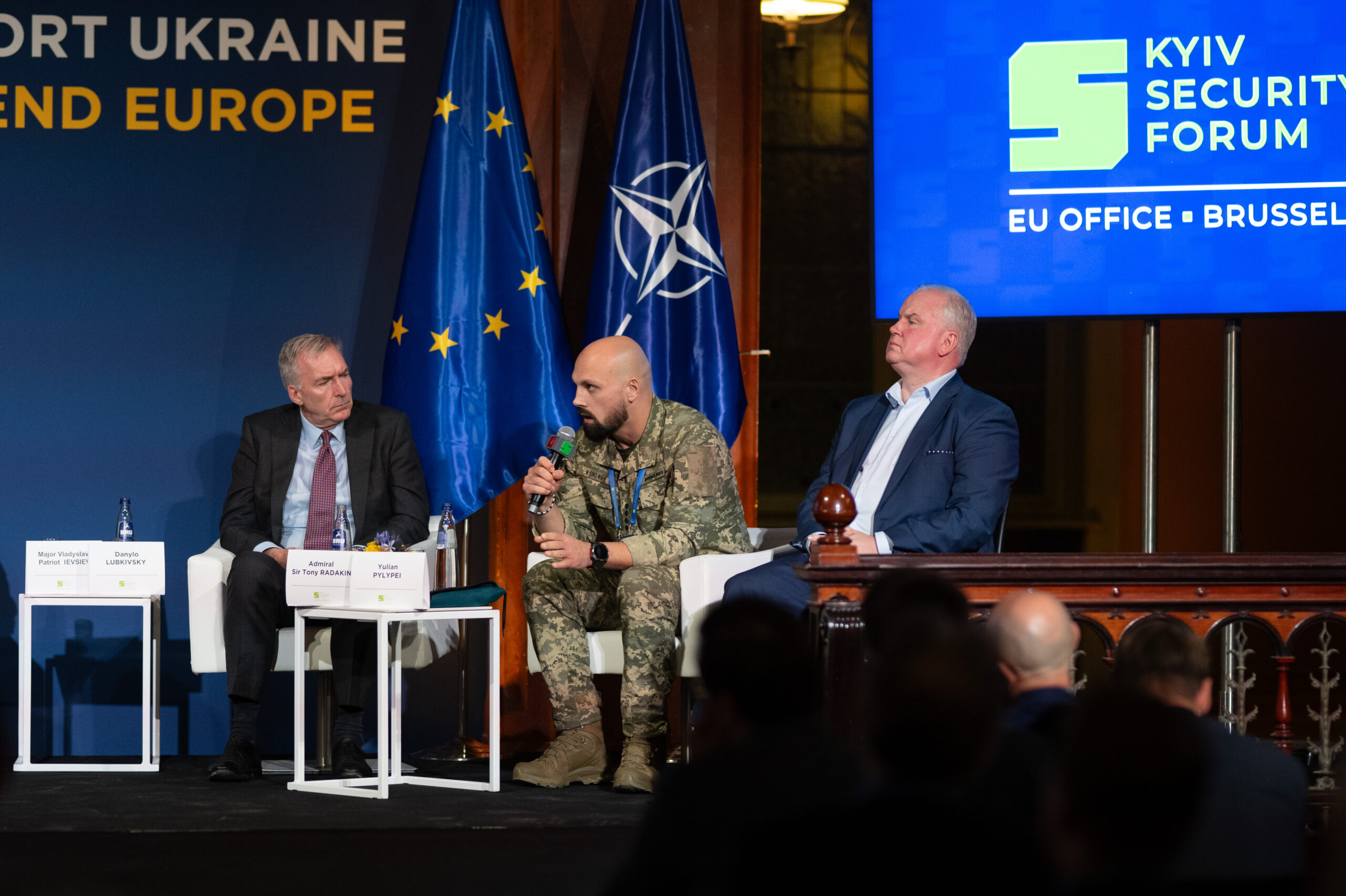
Captain Yulian Pylypei, who spent two and a half years in Russian captivity, described systematic torture, starvation and psychological pressure inflicted on Ukrainian prisoners of war and civilians.
According to Pylypei, the system used in Russian prisons is built on three elements: fear, pain and starvation, compounded by complete isolation from information.
He said he had lost more than 35 kilograms during his captivity and spent his final six months in solitary confinement in a cell measuring approximately two by two metres. During one six-hour interrogation, his captors used stun guns against him.
Pylypei estimated that between 5,000 and 7,000 people may still be held in Russian captivity. He stressed that international humanitarian organisations lack proper access to facilities where Ukrainian prisoners are detained.
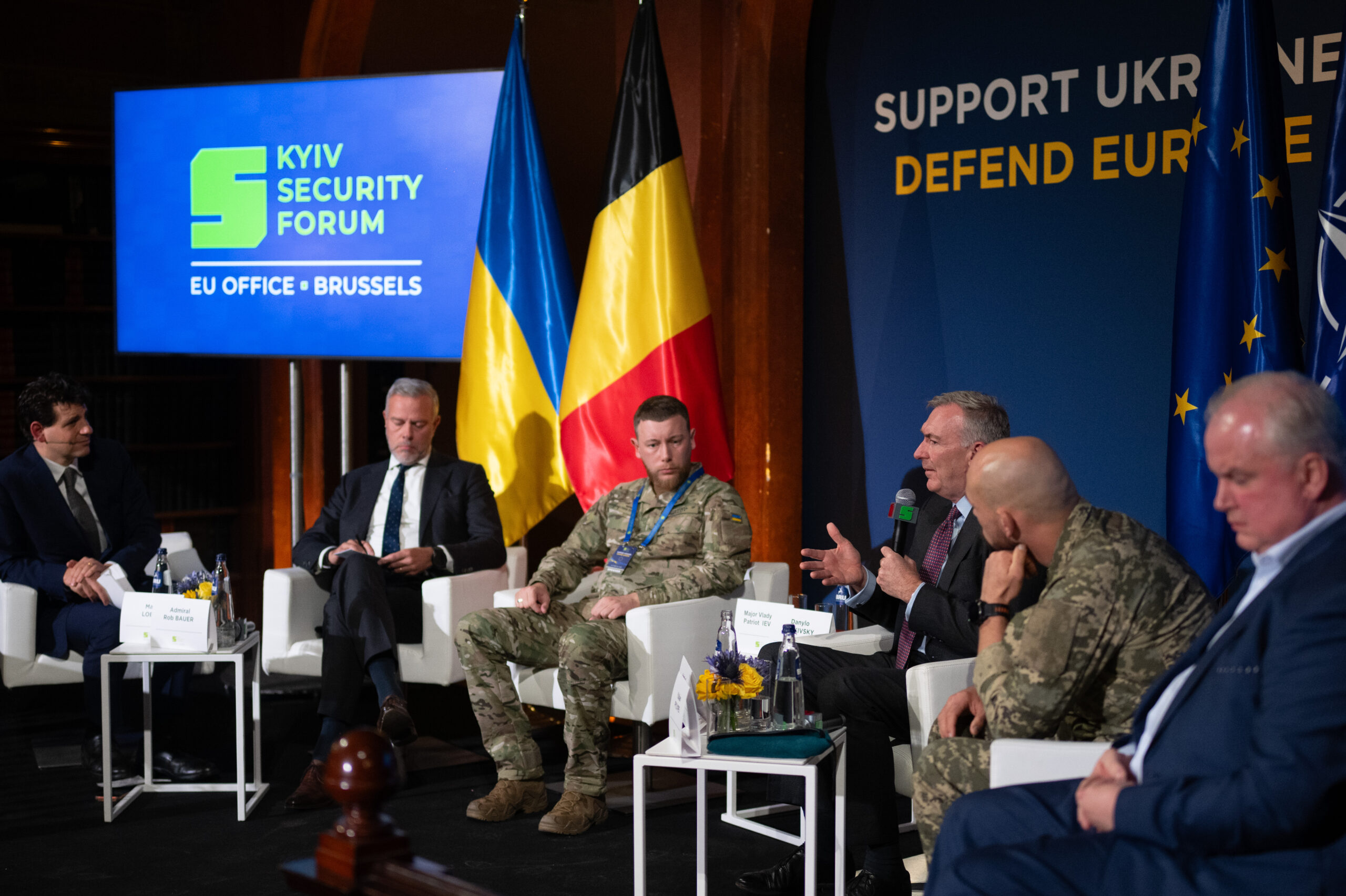
Admiral Sir Tony Radakin, responding to the Ukrainian Marine’s testimony, praised his courage and his decision to return to military service after being released from captivity.
“That is why Ukraine is going to win this war. That is why Russia is losing this war,” the former UK Chief of Defence Staff declared.
Radakin emphasised that the West is learning from Ukraine’s experience of modern warfare, particularly the rapid development of drone technologies, the ability to adapt quickly, and the integration of military, political, diplomatic and economic instruments.
He also called on Ukraine’s partners to mobilise additional resources to sustain the country’s defence capabilities and economic resilience.
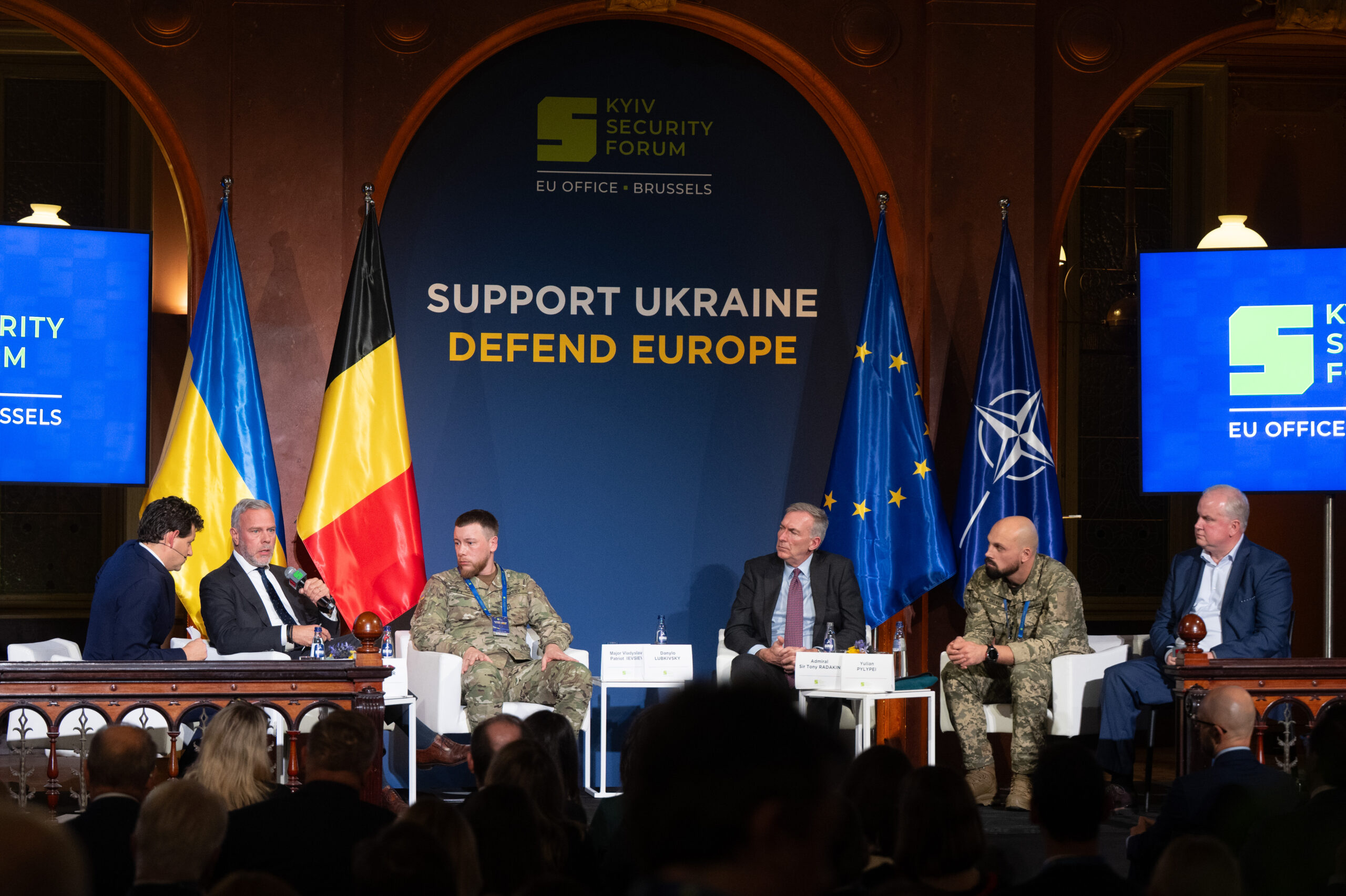
Admiral Rob Bauer described Russia’s war against Ukraine as evidence of a profound crisis in the international order.
“I think that what we see in this war is the complete moral failure at this moment in the world,” the former Chair of the NATO Military Committee said.
He stressed that 81 years after the end of the Second World War, the world is once again witnessing widespread violations of international humanitarian law, while political discussions often focus on money, territory and the possibility of resuming business with Russia.
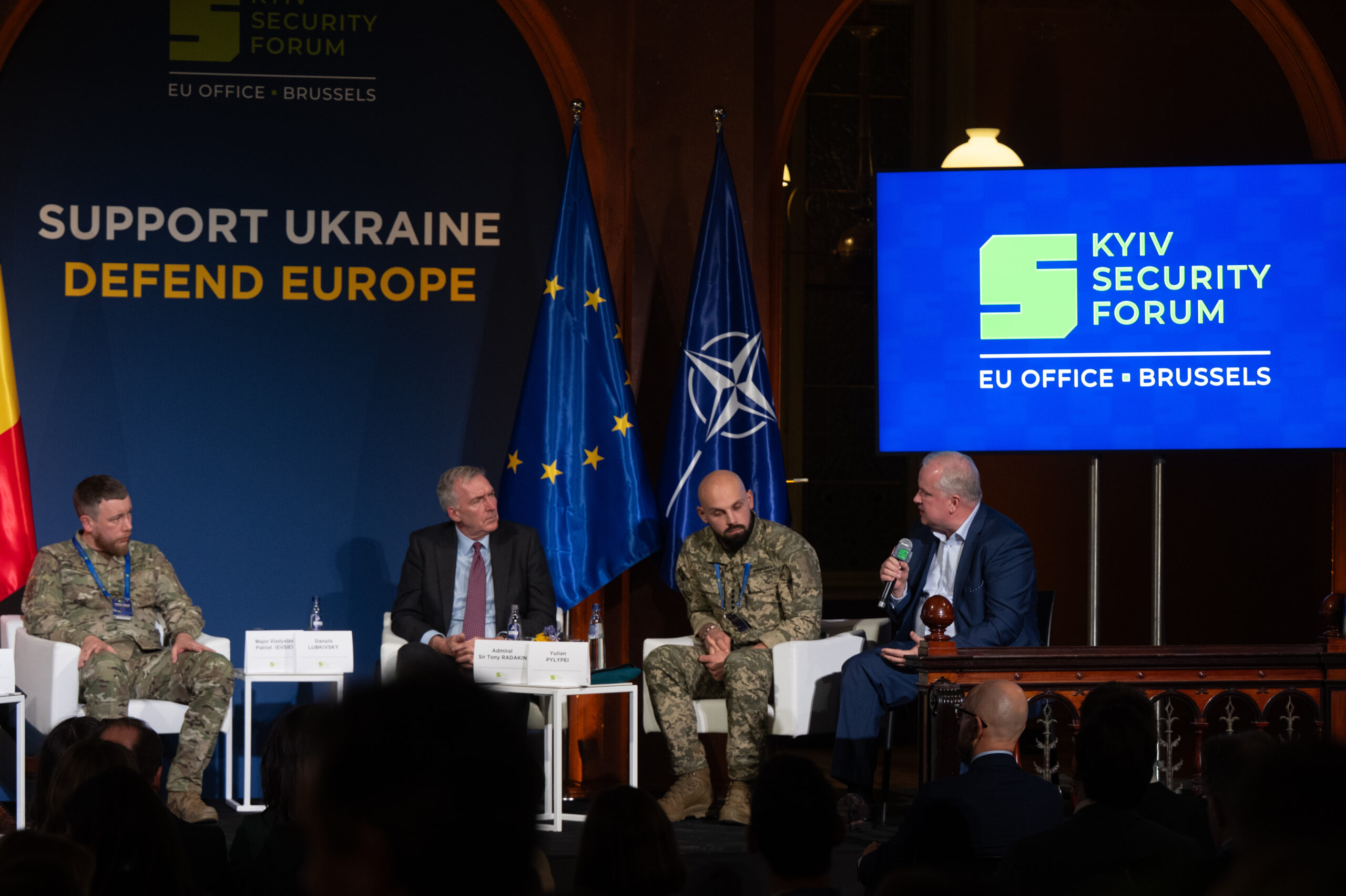
Danylo Lubkivsky emphasised that supporting Ukraine is a matter of security for the entire democratic world, including the United States.
“If Russia wins and Ukraine fails, the world we know would cease to exist. And America as we know it would cease to exist too,” he said, commenting on the debate over the role of American assistance.
Lubkivsky also urged the international community to pay greater attention to the fate of thousands of Ukrainian prisoners of war, describing the inability of international institutions to protect their rights as a crisis of the entire humanitarian system.
He expressed hope that the Kyiv Security Forum and its EU Office would continue drawing international attention to the plight of Ukrainian prisoners.
The discussion highlighted the need to draw on the experience of Ukrainian soldiers to strengthen Europe’s defence capabilities and to maintain the defence of Ukraine as a shared strategic priority for European and Euro-Atlantic partners.
The special event “Support Ukraine, Defend Europe” marked the first high-level event organised by the newly established KSF EU Office in Brussels.